
五行 Gogyō
Issen Nishigaki
Via dei Banchi Vecchi, 24
February 13, 2026 – April 17, 2026
Open Tuesday - Saturday, 12 - 7 PM

Via dei Banchi Vecchi, 24
February 13, 2026 – April 17, 2026
Open Tuesday - Saturday, 12 - 7 PM


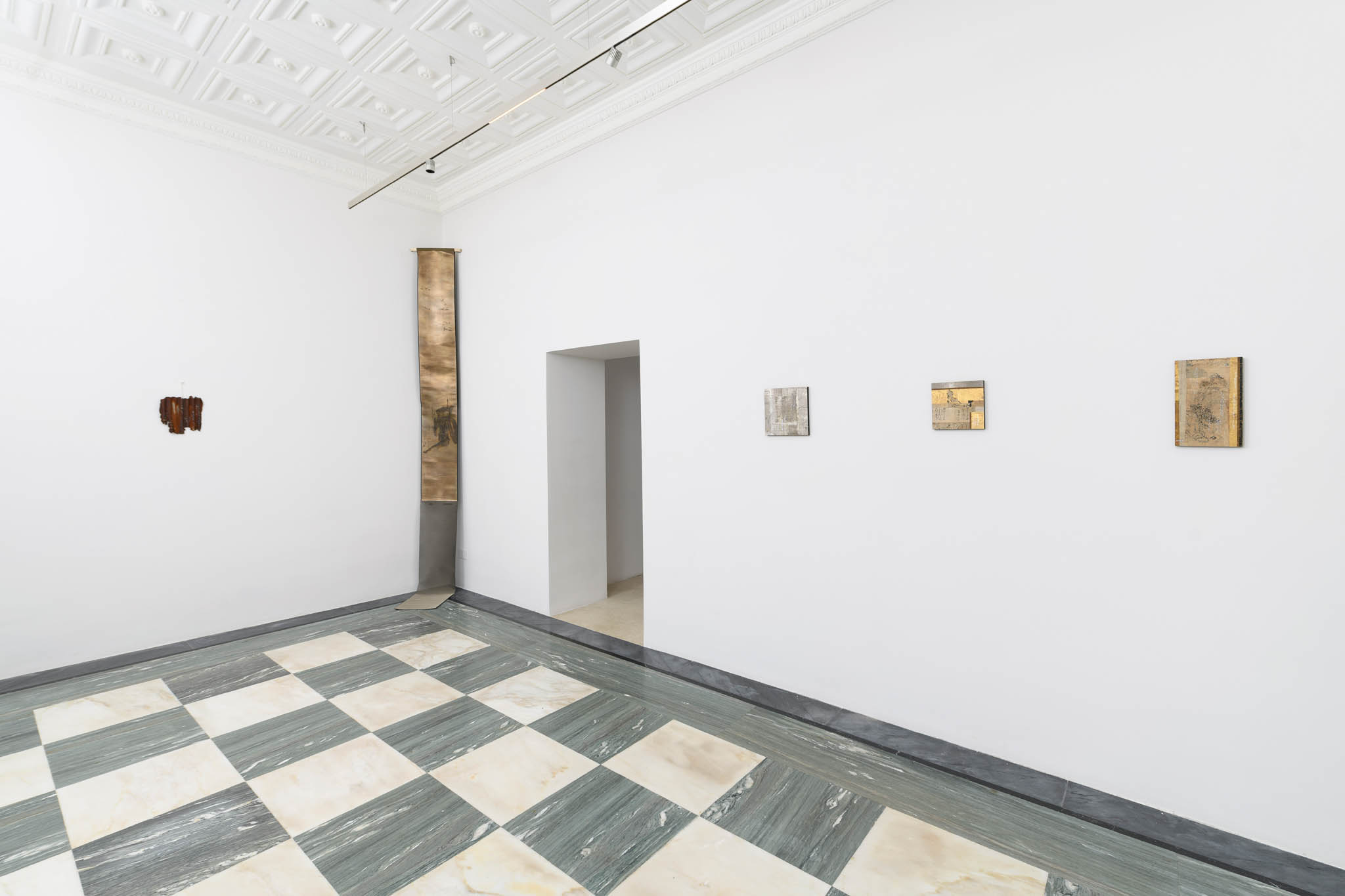


Amanita is pleased to present Gogyō, Issen Nishigaki’s first solo exhibition in Rome.
Issen Nishigaki (b. 1952, Usa City, Japan) is a Japanese calligrapher and five-line poet. Her work has been presented in numerous exhibitions throughout Japan as well as internationally.
She is the author of several poetry books, including Issen 5-Line Poetry Collection: Inner Views. Over the course of her career, she has written more than 3,000 poems, centered on themes of love, nature, and sumi (ink). Nishigaki is the head of the MIZUKUKI Calligraphy Association and the Five-Line Poet Salon. In addition to her literary and calligraphic practice, she is also active as a designer.
Issen Nishigaki (Usa city, 1952) began studying calligraphy at the age of six. From 1979, she trained in classical shodō (書道) calligraphy under Takata Mugen (a disciple of Ueda Sōkyū). In 1992, she began working with abstraction through ink. Three years later, she encountered Gogyōka (五行歌), a new form of Japanese poetry, and began producing works in which calligraphy is expressed through poem. Nishigaki’s practice stems from a deep interest in Japanese antiques; she works with aged materials such as paper from folding screens, as well as gold and silver leaf, fusing—or allowing them to communicate—with her own compositions.
Words are used to speak and write. These acts are not limited to the transmission of meaning; they generate forms of expression that engage with the totality of human life. Spoken language carries rhythm and melody and may become song. Writing characters, as demonstrated by Inoue Yūichi, produces formal beauty. This beauty resides not only in the visual form of the characters themselves, but also in the dynamic vitality revealed through the flow and fading of ink lines, and in the depth of human existence expressed by lines that bend, hesitate, and settle. This is particularly evident in works addressing themes such as Poverty (貧), which Inoue frequently explored.
By contrast, Issen Nishigaki is a kajin (歌人)—a poet. Working in the tradition of Gogyōka, she does not write isolated characters but sentences: songs and poems of her own composition. Even when her work appears to take the form of single-character calligraphy, as in Inoue’s practice, that character itself constitutes a sentence. To write sentences—songs and poems—is to connect with the people who have nurtured those words, and thus with history itself. If Inoue’s art unfolds primarily through the visual form of the character, Issen’s art operates through its relationship to historical time and lived experience.
For this reason, the artist employs materials such as gold and silver leaf that have endured for one or two centuries, alongside discarded papers that have likewise passed through time. By connecting and collaborating with people of the past, she produces her works. Whereas Marcel Duchamp created contemporary art by severing historical continuity, Issen may be said to pursue contemporary art by reestablishing connections with historical contexts.